
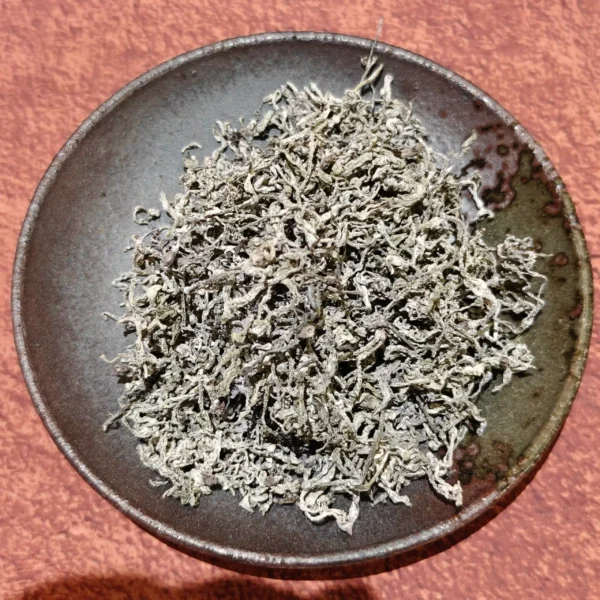
Comprehensive Guide to Vine Tea (Ampelopsis grossedentata)
Historical Origins
Vine tea is not a true tea, but rather made from the young shoots of Ampelopsis grossedentata (commonly known as “显齿蛇葡萄”), primarily found in the Wuling Mountain Range. The Tujia ethnic group reveres it as “Immortal Grass” (神仙草), and its medicinal use was documented in the Ming Dynasty’s Compendium of Materia Medica. In 1993, China Pharmaceutical University identified its high flavonoid content, and it is now a National Geographical Indication product.
Tea Characteristics
1. Appearance & Color
– Dry Leaves: Twisted like dragon’s beard, coated with white frost (natural flavonoid crystals), presenting a mix of gray-green and silver hues.
– Wet Leaves: Purple-red stems with cicada-wing-thin leaves, densely covered in white fuzz on the underside.
2. Sensory Experience
– Liquor Color:
? Fresh tea: Pale yellow-green (resembling mung bean soup).
? Aged tea: Amber.
– Aroma:
? Grassy (fresh leaves).
? Herbal-medicinal (after aging).
– Flavor:
? Slightly bitter upfront, transforming into sweetness within 3 seconds, with a minty throat-cooling sensation.
? Lingering herbal aftertaste reminiscent of Smilax glabra (土茯苓).
Brewing Artistry
1. Direct Cup Brewing (Simple Wellness)
– Tools: Straight glass cup (400ml).
– Steps:
① Rinse 2g tea briefly with boiling water.
② Fill 80% with 95°C water.
③ First steep for 2 minutes (pronounced bitterness).
④ Rebrew up to 5 times, extending steeping by 1 minute each.
2. Decoction Method (Traditional Remedy)
– Tools: Clay pot (800ml).
– Key Techniques:
① Simmer 5g dry leaves in 500ml cold water for 15 minutes.
② Sweeten with rock sugar.
③ Ideal for soothing throat discomfort.
3. Cold Brew (Summer Refreshment)
– Process:
① Steep 3g tea in 600ml mineral water.
② Refrigerate for 8 hours; add honey and lemon.
③ Reduces bitterness by 70%, enhancing cooling effect.
Core Benefits
– Active Compounds: Dihydromyricetin (flavonoid) content ≥25%.
– Usage Advice: Limit to 6g daily; avoid on empty stomach.
– Storage: Airtight, away from light; aging mellows bitterness.
(Note: Premium vine tea must exhibit “Three Musts”: visible frost, sweet aftertaste, and throat-cooling sensation.)
—
Key Terms:
– Wuling Mountain Range (武陵山脉): A biodiverse region spanning Hunan, Hubei, and Guizhou.
– Dihydromyricetin (二氢杨梅素): A potent antioxidant flavonoid unique to this plant.
– Smilax glabra (土茯苓): A traditional Chinese medicinal root with detoxifying properties.
Reviews
There are no reviews yet.