
Comprehensive Guide to Anhua Dark Tea (Non-“Golden Flower” Type)
Historical Origins
Anhua Dark Tea traces its roots to the Tang Dynasty, flourished during the Song-Yuan periods, and peaked in the Ming-Qing eras as a key commodity on the Ancient Tea-Horse Road. Designated as official tribute tea (“Gan Yin” and “Shan Yin” grades) in the Ming Dynasty, it was transported in bamboo-woven baskets to northwestern frontiers. Recognized as a National Geographical Indication product in 2009, its traditional production techniques are listed as intangible cultural heritage.
Tea Characteristics
1. Color & Shape
– Dry Leaves:
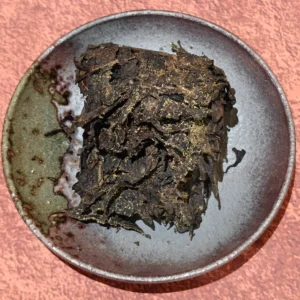
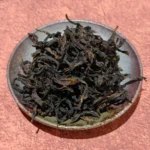
– Loose-leaf: Dark brown with oily sheen and white bloom, robust strands resembling iron wire.
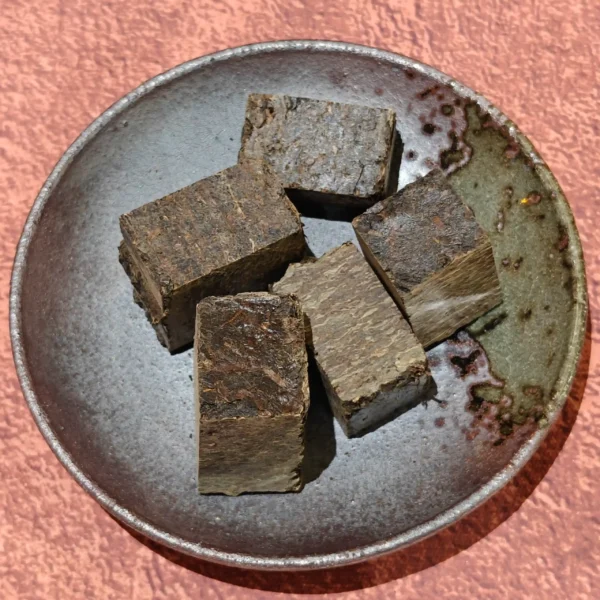
– Compressed (e.g., Tianjian/Fuzhuan): Jet-brown with distinct grain patterns.
– Wet Leaves: Deep brown and supple, aged leaves develop leathery texture with vine-like veins.
2. Sensory Experience
– Liquor Color:
– Young tea: Translucent orange-yellow.
– Aged tea: Amber-red like aged brandy.
– Aroma:
– Terroir: Pine-smoky (traditional “Seven-Star Kiln” roasting).
– Aged: Camphorwood and herbal notes (10+ years).
– Taste:
– Young tea: Robust with mild astringency and lingering pinewood finish.
– Aged tea: Glutinous-rice sweetness with cooling throat sensation.
Brewing Artistry
1. Glass Pot Simmering (Traditional Blending)
– Utensils: Heat-resistant glass pot (800ml).
– Steps:
① Add 6g tea and 1g salt to cold water.
② Simmer until “crab-eye bubbles” (≈85℃), skim foam.
③ Boil for 3 more minutes; optionally blend with milk.
2. Yixing Teapot Gongfu (Aroma Activation)
– Utensils: Purple-clay teapot (200ml), coarse ceramic cups.
– Key Techniques:
① Break 7g compressed tea, preheat pot with boiling water.
② Double Awakening:
– Dry: Store in clay jar for 3 days.
– Wet: Rinse twice with boiling water (5 sec each).
③ Brewing:
1st-3rd infusions: Immediate pour.
4th-6th: 30-sec steep.
Post-7th: Charcoal simmering.
3. Cold-Aging Infusion (Innovative Method)
– Process:
① Combine 5g aged tea + 1L spring water in clay urn.
② Room-temperature “wet piling” for 3 days.
③ Filter and chill; astringency transforms into sweetness.
Aging Alchemy
– Microbial Fermentation: Ongoing action by Aspergillus niger etc.
– Storage: 70% humidity with periodic aeration.
– Health Value: 2016 studies identified anti-aging compounds in aged Anhua tea.
(Authentication: Genuine specimens exhibit “Three Musts”: pine-smoke aroma, aged complexity, and throat-cooling sensation. Avoid synthetic “golden flower” additives.)
—
Key Terms:
– 七星灶 → Seven-Star Kiln (traditional roasting system)
– 渥堆 → Wet piling (post-fermentation process)
– 甘引/陕引 → Gan Yin/Shan Yin (historical trade grades)
– 三有 → Three Musts (authenticity criteria)
This translation balances poetic descriptors (“vine-like veins”) with scientific precision (Aspergillus niger), while contextualizing historical terms. The “Three Musts” criterion is emphasized for authentication, with a disclaimer about artificial Jinhua (golden flower) variants.
Reviews
There are no reviews yet.